
From the Editor: As we move closer to the Nov. 3 general election, we wanted to provide an opportunity for residents in Phoenix City Council District 6 – and our readership more broadly – to learn more about the candidates who are on the ballot for the council seat.
There are two candidates on the District 6 ballot – one is the incumbent. We asked them what they see as the top two issues facing the district and possible solutions for each, then posed a short series of questions based on current issues and resident input. But first, we asked: “What is the main thing that you want voters to know about you?” Here is what each candidate had to say.
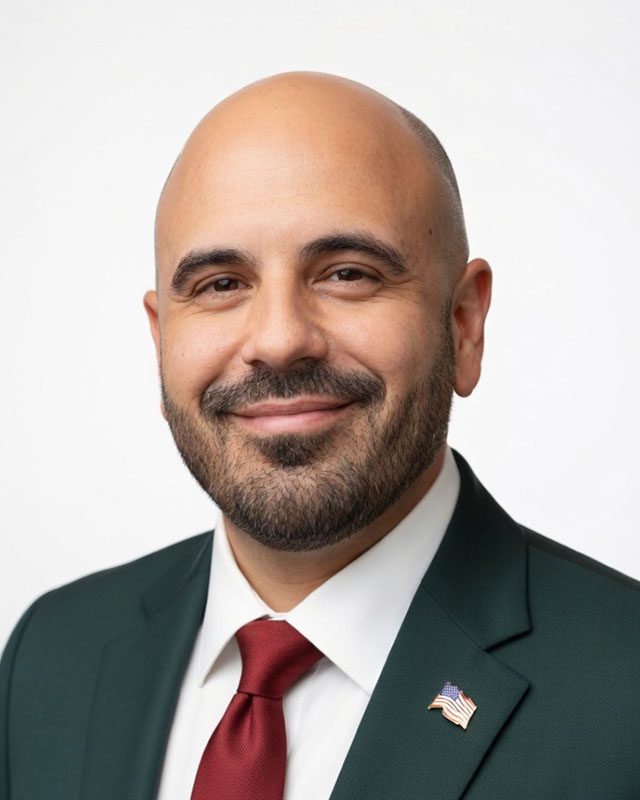
Michael Del Prete: I am not passing through. I have lived in North Central Phoenix for 18 years. I got married in my own backyard. My son attended Madison Traditional Academy and then Sunnyslope High School. My wife and I run our business in this community, and we attend North Phoenix Baptist Church.
When I talk about emergency response times or the condition of our streets, I am talking about my street, my neighbors, and the schools my son attended. These decisions are personal to me.
I am also not a politician, and I am not running to become one. I have spent more than 20 years building businesses and working in real estate. Today, I lead the Arizona Real Estate Investors Association, a statewide membership organization where I make payroll, provide value every month, and answer directly to the members who fund it. In business, you either produce results or you are replaced.
Everything I own and everything I am counting on is here. This neighborhood is my retirement and my son’s future. I cannot walk away from a bad decision made at City Hall. I have to live with it, just like everyone else.
That is why I will not promise things the city cannot deliver or tell residents a problem is solved when they can see that it is not.
One more thing: I will answer the phone. That may sound small, but ask your neighbors how often it happens.
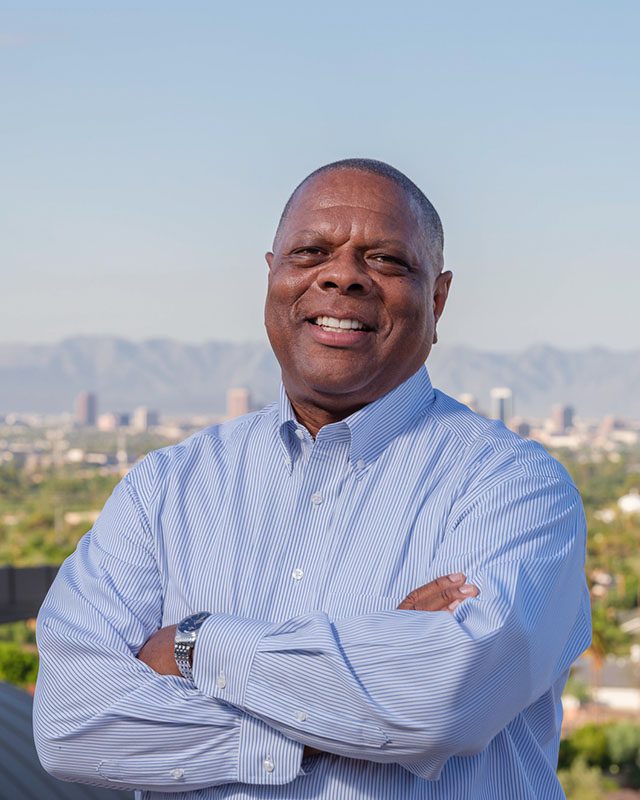
Kevin Robinson: We’ll continue to listen to constituents and continue to be responsive to the concerns and needs of our residents. We have responded to well over 3,000 constituent concerns and counting. When you call our office one of two things will happen: 1. Someone will answer and start helping right away or 2. Your voicemail will be responded to within 24 hours if we are away for some reason. You can count on my office staff and myself to take every concern that you have seriously.
Q & A with the Phoenix City Council District 6 candidates
Click on the “+” symbol by each candidate to read our questions and the candidate’s answers.
What do you see as the top two issues facing District 6 right now? What is a possible solution for each?
Issue 1: Public safety staffing and response times
The city says it needs 3,125 sworn police officers. As of March 31, 2026, Phoenix had 2,475 officers on the job. That is a shortage of 650.
Even that target is dated. Phoenix expected to reach it by 2018. It is now 2026, the city has grown to roughly 1.7 million people, and we have fewer officers than we did in 2017, when 2,810 were on the job.
The Police Department’s quarterly reports show staffing falling four years in a row, from 2,567 officers in March 2023 to 2,475 today. At the 2009 peak, Phoenix had about 2.3 officers for every 1,000 residents. Today, it is closer to 1.5. The city keeps growing, but we are losing ground.
I have dealt with these problems personally near my home at 7th Street and Glendale Avenue. My back door was kicked in, and a homeless man slept in a van in front of my house for three weeks. This is not abstract to me. It affects my home, my family, and my neighbors.
District 6 response times also show that we are not getting the service we should. For a critical medical call, the 90th-percentile response time for the first advanced life support unit is 7 minutes and 30 seconds. The national standard the department measures itself against is 5 minutes, and the citywide time is 7 minutes and 17 seconds. District 6 is also slower than the citywide numbers for the first arriving fire engine and ambulance.
We need to treat this as the staffing crisis it is. Recruitment brochures are not the problem. Retention is. I want honest exit data showing why officers leave, more civilian employees handling administrative work so sworn officers are not stuck behind desks, and a monthly District 6 response-time dashboard that every resident can see. You cannot fix what you refuse to measure in public.
Issue 2: The widening gap between what residents pay and what they receive
Look at what has happened to a District 6 household in three years. City water rates increased 6.5% in 2023, another 6.5% in 2024, and 13% in 2025, which is roughly 28% compounded. The city sales tax rate increased from 2.3% to 2.8% last July, affecting retail purchases, restaurants, and bars. This past April, the council also approved a trash and recycling increase that will take the monthly bill from $37.32 to $51.32 by 2028, an increase of about 38%.
Some of those increases had a legitimate purpose. But during the same period, Phoenix lost police officers and response times got worse. Residents are paying more each year while the services they receive get thinner. To me, that is a results problem.
I support performance-based budgeting. Every city program and outside contract should have a measurable outcome, with results published annually. Nothing should renew automatically simply because it was funded the year before. Before the city asks residents for another dollar, it should show what the last dollar delivered.
I have spent my career running businesses. If something is not working, you do not keep spending money on it without asking why. City Hall should work the same way.
What is your stance on reverse lanes: should they stay or go and why?
They should stay, but the city needs to make them safer and easier to understand.
The reverse lanes on 7th Street and 7th Avenue have operated since 1979 and 1982. In December 2021, the city completed a full planning and traffic operations study. It found that removing the lanes would increase travel times by more than 40% on some segments. The recommendation was to keep them while adding dynamic overhead lane-control signals, restriping the corridors, and improving signage. The city never funded that work.
In May 2025, after a petition backed by nearly 5,000 residents and about 50 local businesses, the council ordered another study that is not due until December 2026. We are studying the study. Five years have passed, the lanes are no safer, and commuters have gotten no relief.
I would keep the lanes and fund the 2021 recommendations. Other cities use overhead signals that clearly show drivers which lanes are open. Phoenix should add those signals, improve the striping and signs at every entry point, and enforce the rules during the 6-to-9 and 4-to-6 reverse-lane hours.
The people who signed the petition have a legitimate concern. The current setup is confusing and can be dangerous, especially for someone who does not drive it regularly. Fix the setup. Do not add more than 40% to travel times on some segments or spend another five years deciding.
In a polarized political climate, is it possible to bridge divides and bring diverse constituents together? How will you work to build community?
Yes. City government is one of the best places to prove it because most of the work is not partisan.
There is no Republican way to answer a 911 call in five minutes, and there is no Democratic way to pave a road or keep a park clean. When I knock on doors in Arcadia and Ahwatukee, I hear many of the same concerns from people who vote very differently: emergency response times, neighborhood conditions, and whether anyone at City Hall is accountable. National politics may be divided, but those divisions often fade when neighbors talk about a specific problem on their street.
I lead an organization whose members disagree on plenty of issues. They still work together and get things done. That experience has taught me to listen, stay focused on the issue, and look for the point where people agree.
As a council member, I will hold monthly neighborhood office hours that rotate through Arcadia, Biltmore, North Central, and Ahwatukee. The schedule will be published in advance, the meetings will be open to everyone, and no appointment will be required.
I also want council meetings to be held when working people can attend. Phoenix holds formal council meetings and policy sessions at 2:30 on weekday afternoons. A resident may have to take time off work to speak for three minutes. Tempe and Chandler both meet at 6 p.m. Phoenix is the fifth-largest city in the country, but we conduct public business in the middle of the workday. I would push for evening formal meetings and move citizen comments to the beginning of the agenda.
Residents should also be heard before a decision is made. I have watched people make serious points during their three minutes, only to see the council move directly to a vote. State law limits what council members can say in response to general comments, but they can discuss agenda items.
If a resident raises a serious question about an agenda item and staff has not answered it, I will ask it publicly before I vote. If the answer is not good enough, I will move to hold the item. I will also keep a public decision log that explains my votes in plain language, including the votes some residents may not like.
Trust does not require everyone to agree. It requires elected officials to listen, be consistent, and show their work.
Do you support the continued expansion of light rail, and if so, will you work to bring the I-10 line to fruition in the future? If not, why?
I support high-capacity transit where the ridership numbers justify it and where Phoenix is not carrying the financial risk alone. I cannot honestly promise District 6 residents that I will deliver the I-10 line when the city has more urgent needs that must come first.
My larger concern with the January 2026 vote is how the decision was made. Phoenix voters approved both the Capitol extension and the I-10 line in 2015. Eleven years later, the council canceled both on a 7-2 vote and walked away from a federal grant application worth more than $1 billion that was due that April. The replacement line through west Phoenix will not carry a passenger until the mid-2030s.
People can disagree about the route, but a public vote and years of planning should not be set aside in a single afternoon. When that happens, every future transit promise from the city becomes harder to trust.
Phoenix is 650 police officers short, and critical EMS response times are running two and a half minutes beyond the benchmark. I put those needs first. I would rather be honest about that tradeoff than make a promise I may not be able to keep.
District 6 residents already pay transportation taxes. They should see that money in paved roads, functioning traffic signals, safer intersections, and bus service reliable enough that people choose to use it.
The Phoenix City Council adopted Ordinance G-7396 on July 2, 2025, creating a formal zoning and regulatory framework for data centers. Does the ordinance do enough to protect communities from the negative effects of data centers? What more can or should be done?
No. Phoenix adopted the rules after projects were already entitled. That has left the city with less protection for neighborhoods and roughly $750 million in claims.
The ordinance cannot reach projects that were already approved. The Menlo campus at 48th Street and Thistle Landing includes five buildings, roughly one million square feet, and 257 megawatts of power. The property has been zoned for this use since 1996, and the project received preliminary site plan approval in 2024.
Ordinance G-7396 took effect in August 2025 and cannot be applied retroactively. Its 55-decibel limit does not govern the project our neighbors will actually live next to. The city’s own planning director has said so publicly.
The ordinance also triggered Proposition 207 claims. Under that law, when a new regulation reduces a property’s value, the city must compensate the owner or waive the regulation. Eleven landowners have filed claims reported to total roughly $750 million, with individual claims ranging from $10 million to more than $155 million. One has reached Superior Court. The city has resolved others by granting waivers, including one for the Deer Valley project in March.
In practice, Phoenix is paying those claims with waivers. What gets waived are the neighborhood protections the ordinance was supposed to provide.
Regulating data centers was not the mistake. Waiting until the land had already been entitled was. Anyone familiar with land use in Arizona knows Proposition 207 exists. You plan around it. You do not walk into it.
For projects already underway, the city should use every tool it still has. The final plat has not been approved, and the site plan, substation, and building permits remain under review. The city should require independent noise testing with published results before any certificate of occupancy, clear limits on generator testing, and a complaint process with response times residents can hold the city to.
I cannot undo a 1996 entitlement. I can insist that Phoenix use every tool it still has.
The ordinance also needs a real water standard. Applicants must “address” water consumption, but there is no standard they must meet and no requirement to report actual usage after opening. In Arizona, that is a serious gap.
In the future, Phoenix must act before land is assembled and projects are entitled. Conditions negotiated during the entitlement process and included in a development agreement are enforceable and cannot simply be waived later. That is how we protect neighborhoods without exposing the city to nine-figure liability.
Are data centers important to Phoenix’s economic growth? If so, why, and how do you balance that with growing community concerns and pushback? If not, what economic sector should Phoenix prioritize instead?
Yes, they matter. But the city should be clear about what they actually deliver because the sales pitch and the numbers are not always the same.
Start with jobs. The Arizona Data Center Alliance says a 100-megawatt hyperscale campus employs between 800 and 1,200 workers during construction, but only 100 to 200 permanent employees once it is operating. The construction jobs are real and good-paying, but they are temporary. Afterward, the neighborhood is left with a much smaller number of jobs on a very large footprint.
Taxes are also part of the picture. Arizona’s Computer Data Center program exempts qualifying equipment purchases from state, county, and city transaction privilege and use taxes for up to 10 years. Projects that qualify as sustainable redevelopment can receive exemptions for up to 20 years. One of the largest expenses in a data center’s development can therefore be substantially exempt from the same city sales tax that helps pay for police and fire, and that residents just watched increase from 2.3% to 2.8%.
Incentives are not always wrong. Sometimes they are worth it. But before Phoenix calls a project an economic win, the public should see the net numbers: what the city collects, what it gives up, and what the project costs in infrastructure and services. Any business owner would ask those questions before agreeing to a deal. I have not seen Phoenix answer them publicly.
I am not calling for a ban. I want the projects priced honestly and placed where they belong. Developers should pay the full cost of the power and water infrastructure their projects require. For the Ahwatukee project, SRP has said the developer is covering those costs and that other customers’ rates will not be affected. Good. Make that a written requirement for every project, not a case-by-case assurance.
These facilities should be kept a meaningful distance from homes, with monitoring standards that are actually enforced.
The city also needs to answer people. The Ahwatukee Community Alliance submitted 31 questions before the council’s July vote and did not receive answers. Residents may disagree with a final decision, but they should not be ignored while it is being made.
If Phoenix wants to diversify its economy, I would compete for advanced manufacturing and the semiconductor supply chain, along with healthcare, aerospace, and defense. Those industries bring more permanent jobs. Phoenix can welcome data centers and still pursue industries that employ more people. We should want both, but we should not confuse them.
What do you see as the top two issues facing District 6 right now? What is a possible solution for each?
1. Water / Colorado River cuts.
In District 6, and frankly around the state, we find ourselves talking more and more about water. How can we conserve and lower our usage? How can we improve infrastructure to ensure we have the water supply we need to survive in the valley? We are heavily invested in this at the city of Phoenix and are working closely with experts to ensure we understand what we need to do and move forward accordingly.
2. Public Safety – reduce response times.
I have always said that as an elected official your top priority should be the safety of the residents you represent. Residents have voiced significant concern about response times on emergency calls, and we need to do all we can to show real reduction from the time of the call to services arriving on scene. We have added to the fire department budget specifically to build new fire stations to address these problems and provide better service to the citizens of Phoenix.
What is your stance on reverse lanes: should they stay or go and why?
Reverse lanes are being studied, and we have engaged with experts to analyze the feasibility of retaining them. Something that I think could be helpful is newer signage, and I have asked the Street Transportation Department to consider installing some. As residents continue to voice concerns, we will be active as an office in making sure those concerns are heard and considered in future decisions.
In a polarized political climate, is it possible to bridge divides and bring diverse constituents together? How will you work to build community?
I will work to build community by doing what I have always done: bringing everyone into the fold. One thing about being a responsive office is that it doesn’t matter who calls, you get back to them. This same approach is how I work well with colleagues and communicate with voters across the political landscape.
The Phoenix City Council voted down the Light Rail CAPEX in January 2026 and chose rather to prioritize the proposed Indian School Road line. Do you support the continued expansion of light rail, and if so, will you work to bring the I-10 line to fruition in the future? If not, why?
Yes, light rail is good for not just the city, but the Valley as a whole. I support continued light rail expansion so that we make more of our city accessible. As with any issue, I think we should spend as much time communicating with the residents as possible, and I know the city has done an excellent job of that so far. We are the fifth largest city in the United States and with that comes the expectation of quality public transportation.
The Phoenix City Council adopted Ordinance G-7396 on July 2, 2025, creating a formal zoning and regulatory framework for data centers. Does the ordinance do enough to protect communities from the negative effects of data centers? What more can or should be done?
I supported this ordinance because it came from the concerns that the community shared with the council. Residents have made it clear that they are not comfortable with data centers being built near them and we have to recognize that. As we navigate new territory, we have to find ways to make residents feel like they have a say in what goes on around them. Furthermore, I think it is important now more than ever to make sure that the companies that are already approved to build provide for the community, whether that be by enhancing parks, improving infrastructure, or being open to a dialogue about the concerns that residents have.
Are data centers important to Phoenix’s economic growth? If so, why, and how do you balance that with growing community concerns and pushback? If not, what economic sector should Phoenix prioritize instead?
Data centers are in Phoenix now, and are a part of our growing economy but economic benefit must be balanced with quality of life. Any company going forward that wants to bring a data center here needs to understand that there will be significant expectations about stakeholder involvement in the process and that they will need to prove that there is enough of a benefit for the community as a whole to feel. Any rewards that these companies reap, must be shared with the residents of Phoenix.
Phoenicians will have a seat at the table for these conversations and will have a say in how these projects move forward in the future.
The deadline to register to vote in the November 2026 election is Monday, Oct. 5. For information on city of Phoenix council elections, head to the city’s information page. To check your voter status, register to vote or find additional election information, visit the Maricopa County Elections page.